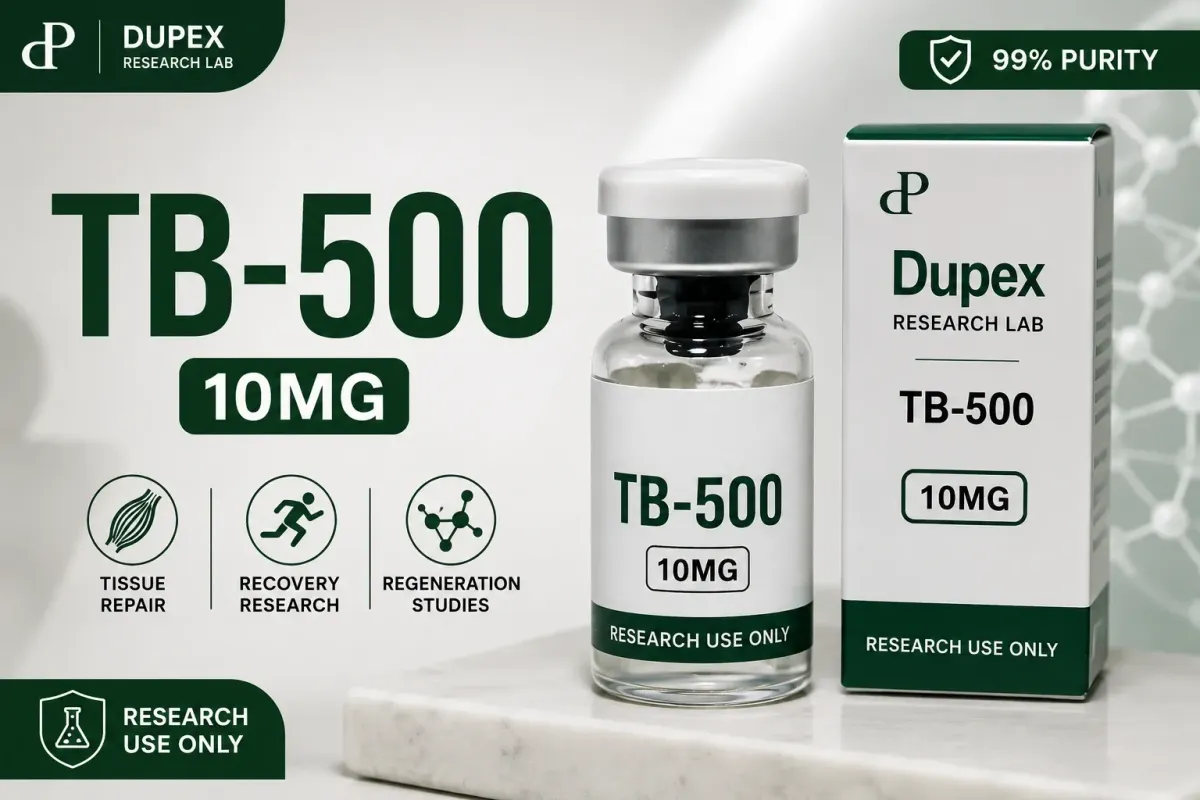
TB-500 10MG for Tissue Repair Research
TB-500 10MG is emerging as one of the most studied recovery-focused peptides available today because of its links with tissue repair, cell migration, soft tissue regeneration and research into recovery science in the lab. With demand for research peptides steadily growing throughout Canada and scientific markets around the world, laboratories are eager to investigate
TB-500 for its research applications, including tendon recovery models, muscle repair research, connective tissue research, and advanced research pathways for regeneration. Dupex Research Peptide High purity formulations of TB-500 are designed for advanced research settings dealing with peptide stability, uniformity, and future regenerative medicine research.
Is TB-500 10MG Good for Tissue Repair and Regeneration Research?
TB-500 10MG has been extensively studied for tissue repair, muscle recovery, connective tissue regeneration, cellular migration and investigations of the recovery pathway. TB-500 is researched due to the fact that it has been linked to Thymosin Beta-4 activity that has actually been shown to be linked to the cellular repair and regrowth processes in laboratory settings.
Why TB-500 Research Is Expanding Rapidly in 2026
The whole peptide industry has changed significantly in 2026. Research labs are no longer only concerned with basic recovery compounds. The emphasis these days is on precision peptide research, fast tissue remodeling, and pathways of cell communication and advanced optimization of recovery.
TB-500 has been the subject of much attention because it connects neatly into these new scientific trends. When studying regenerative biology, researchers tend to focus on peptides associated with:
The recovery of soft tissue after injury is a subject of research
Cellular regeneration pathways
Connective tissue studies
Recovery optimization science
Repair models of tendons and ligaments
Muscle regeneration investigations
Recovery-focused peptide innovation
As the demand for regenerative compounds using peptides has increased, so has the interest in high purity research formulations that enable reproducible lab conditions.
The Science Behind TB-500 and Thymosin Beta-4 Research
A synthetic peptide known as TB-500 is widely recognized as a peptide linked to regions of Thymosin beta-4 with active properties. In a scientific setting, Thymosin Beta-4 has been explored for its part in cell motion and repair systems.
Another factor for the continued popularity of TB-500 in the realm of peptides studies is the scientific investigation into the communication between cells in the recovery process. The researchers are more and more studying the ways peptides can affect:
Cellular Migration Mechanisms
Cellular migration is deemed necessary in the study of tissue repair and during studies of tissue repair the cells should be allowed to move towards damaged tissue.
Tissue Remodeling Research
Tissue remodeling pathways are very important in modern recovery science, particularly in studies of muscle, tendon and connective tissue.
Recovery Environment Optimization
Scientists are still investigating the potential of regenerative peptides in wider biological recovery contexts, not just in terms of individual mechanisms.
Structural Regeneration Models
The research applications for TB-500 are often found in more advanced laboratory investigations related to tissue structure restoration and recovery research.
Modern trends in regenerative medicine and how they align with TB-500
The market for regenerative medicine is rapidly changing, and scientific studies are focusing on compounds linked to more efficient recovery and adaptability of different tissues. For this reason, TB-500 is very current, matching to a number of key 2026 peptide trends.
Recovery-Based Research Is Dominating the Peptide Industry
There has been a huge surge in research needs for recovery compounds in both scientific and laboratory markets. TB-500 is in this emerging class because scientists are keen to explore environments that support regeneration with peptides.
High-Purity Peptides Are Becoming Essential
Consistency, purity verification and manufacturing transparency are more important than ever to both research facilities and buyers of peptides. Quality peptides produce consistent results, which is why high-quality TB-500 formulations are still becoming popular.
Why Researchers Are Opting for High-Purity TB-500 10MG?
One of the paramount interests in peptide research is purity. For advanced labs, stable research chemicals are essential for conducting accurate peptide analysis and ensuring consistent experimental conditions.
Quality TB-500 10mg formulations need to be of significance for:
Reliable laboratory consistency
Stable research applications
Better peptide integrity
Advanced regenerative investigations
Improved scientific studies reproducibly
The emphasis on premium quality research peptides at Dupex Research Peptide facilitates laboratories to obtain peptides compatible to the current standards of regenerative research.
TB-500 and the Future of Recovery Science
Peptide recovery science is one of the most rapidly expanding areas in peptide research due to the growing interest in the study of biological optimization and regeneration pathways.
The importance of TB-500 research is ongoing due to the continuing growth of recovery-related investigations, including:
Muscle Recovery Research
Muscular regeneration studies are increasingly important within recovery science and advanced peptide investigations.
Tendon and Ligament Research
Connective tissue recovery remains a major challenge in regenerative biology, making tendon and ligament-focused peptide research highly valuable.
Soft Tissue Repair Investigations
Researchers continue exploring peptides associated with structural tissue restoration and recovery adaptation models.
Cellular Recovery Pathways
Modern peptide science increasingly examines how compounds interact with multiple recovery-related biological mechanisms simultaneously.
Why TB-500 Research Matters Long-Term
The medical and biotechnology market is moving toward biological optimization instead of recovery based strategies, which is a growing research interest in peptides.
TB-500 is part of the greater trend of:
Regenerative biotechnology
Precision recovery science
Advanced peptide engineering
Recovery optimization systems
Cellular adaptation research
Bioactive peptide innovation
This is important because the emerging science of peptides is impacting the future recovery therapies, bimolecular research, and tissue engineering strategies.
No longer are researchers and peptide buyers just looking for “recovery peptides.” They are searching for high level research chemicals related to new regeneration science. This change is precisely why TB-500 continues to gain in demand.
Why Dupex Peptide Research Is Positioned for the 2026 Peptide Market
The peptide industry is becoming more competitive as research demand grows globally. Buyers are now more selective about sourcing because peptide consistency and research quality directly affect laboratory outcomes.
Dupex Research Peptide is dedicated to the research-grade peptide formulations that meet the standards of today's expectations for:
High-purity peptide standards
Research-focused quality control
Advanced peptide sourcing
Reliable laboratory applications
High-quality research chemicals
Due to the ongoing expansion of regenerative peptide research, it has become more important than ever for laboratories and peptide researchers to find reliable suppliers of quality peptides, especially those from the research community.
FAQs
For what is the TB-500 10MG research performed?
TB-500 10MG is frequently studied for tissue repair, recovery processes, connective tissue research, muscle regeneration and migration of cells.
Is TB-500 related to Thymosin Beta-4?
Yes, TB-500 is linked with active research areas that are related to Thymosin Beta-4 and regenerative biology studies.
Why is TB-500 so popular among peptide researchers?
The interest in the peptides related to tissue recovery, regeneration pathways and structural repair science is the primary reason why TB-500 is discussed.
What is the significance of peptide purity in TB-500 studies?
In the laboratory research setting, high purity peptides assist with consistency, reliability and reproducibility.
Is TB-500 involved in muscle and tendon studies?
The use of TB-500 is commonly cited in the lab studies of muscle recovery, tendon repair models, ligament investigations and connective tissue regeneration science.
What is the reason behind the popularity of regenerative peptides in 2026?
Researchers are getting increasingly interested in the issues of recovery optimization, tissue engineering and advanced regenerative biology that is making the peptide industry flourish.
Final Note
TB-500 10MG remains one of the most significant peptides in the field of tissue repair, cellular regeneration, and recovery science. Overall, TB-500 10MG is a vital peptide that holds promise for the future of tissue repair, cellular regeneration, and recovery science. With scientific focus on regenerative biology increasing rapidly in 2026, scientists are turning to high-purity peptides linked to structural recovery pathways, connective tissue research, and advanced regeneration studies.
For laboratories and peptide researchers seeking premium-grade regenerative research compounds, Dupex Peptide Research is positioned within the evolving peptide market by focusing on research-quality formulations, advanced peptide standards, and compounds relevant to next-generation recovery science. TB-500 remains highly valuable not only because of current research demand, but because regenerative peptide science itself is rapidly becoming a foundational area within future bimolecular and tissue repair investigations.
